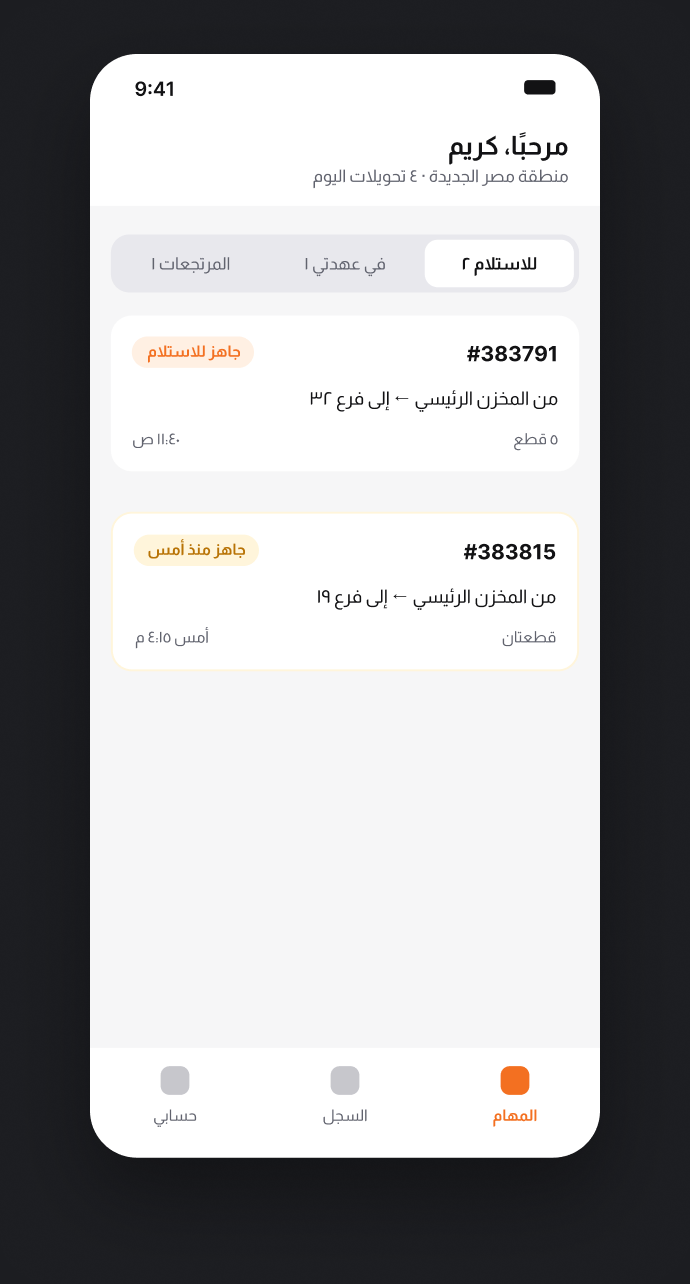
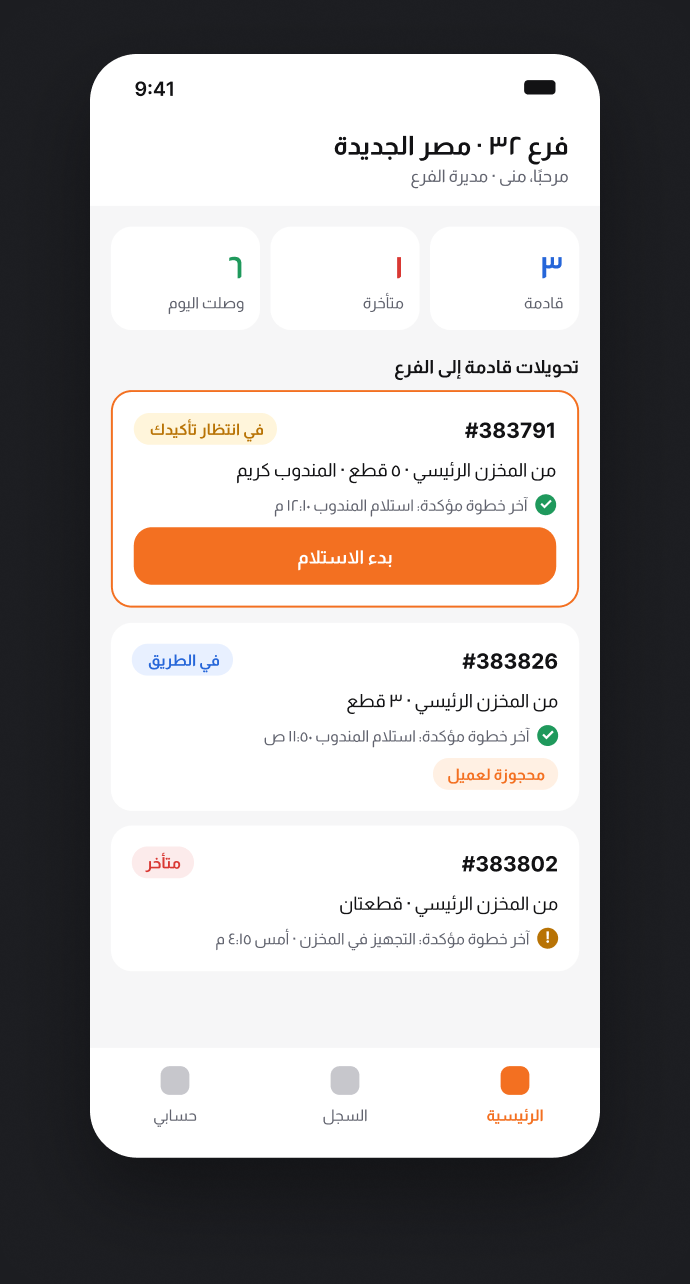
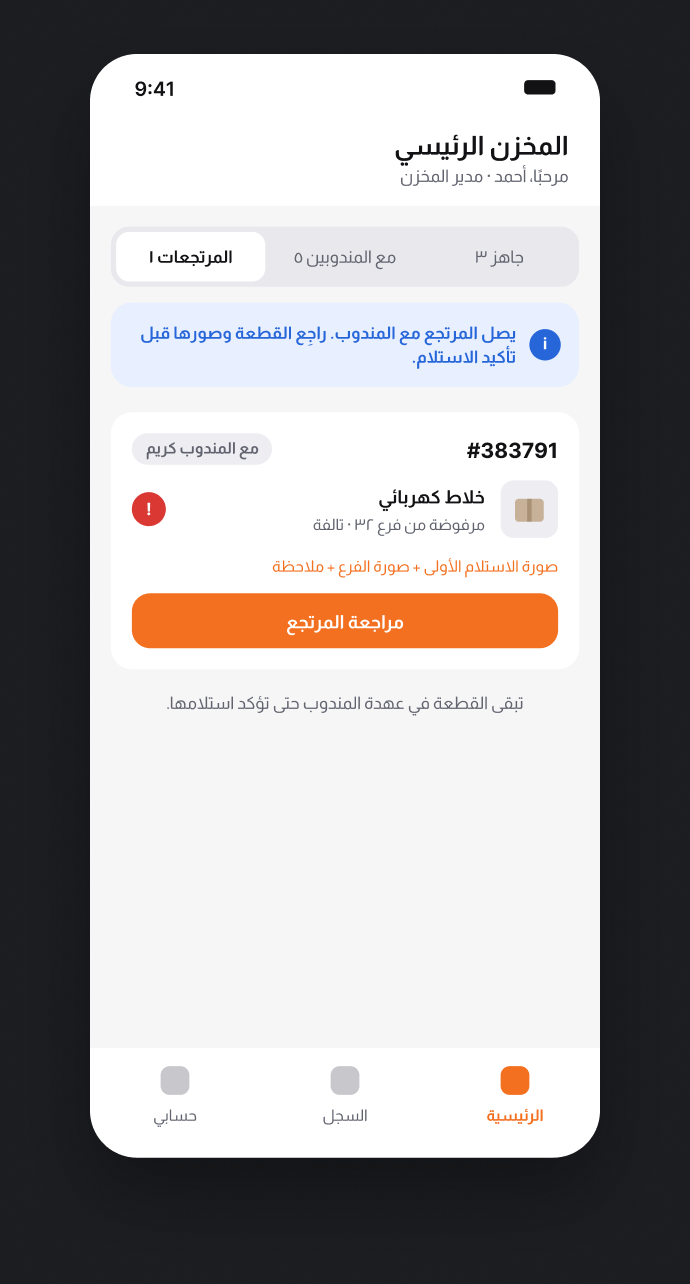
How I helped Volta stop losing reserved sales by making every handoff provable.
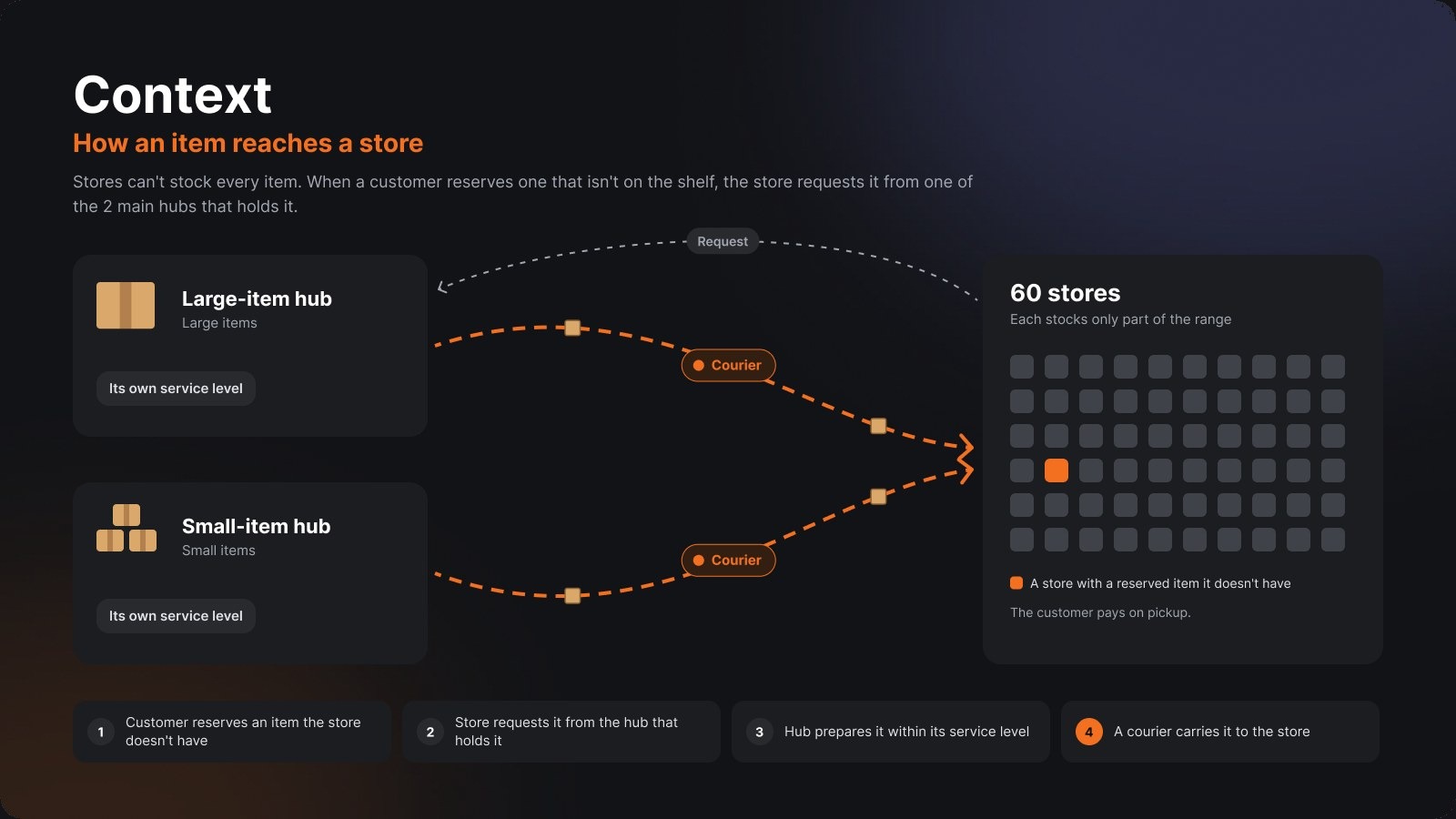
Customers reserved items in store and paid on pickup. Transfers from hubs ran late, nobody could say who held the item, and customers cancelled. I led the discovery with two designers and designed one app for couriers, stores and hubs.
Company name changed for confidentiality.
Role
UX Team Lead
Scope
Discovery and app design
Timeline
2022
Domain
60 stores · 5 hubs · 32 couriers
01
Problem
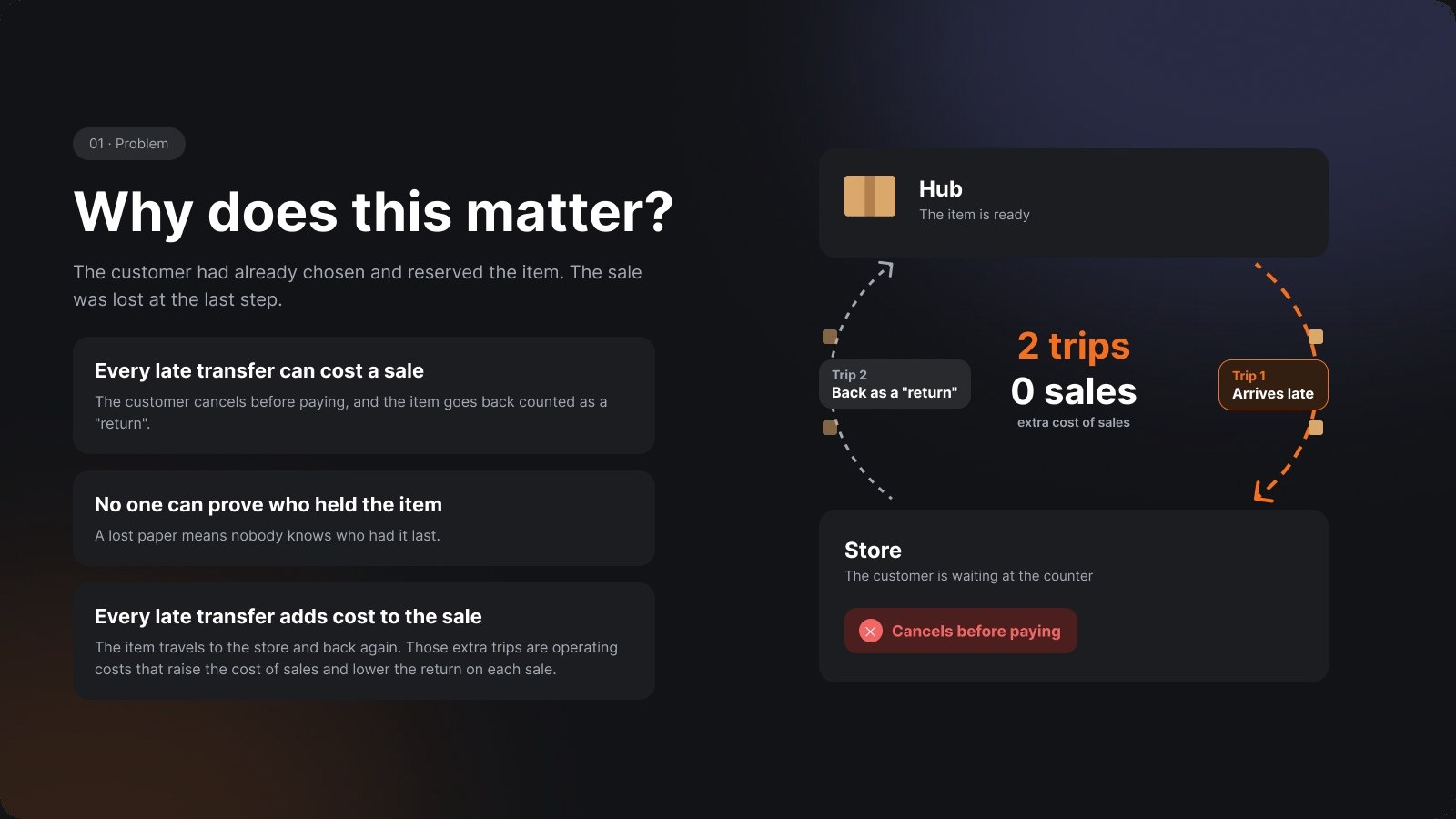
What’s broken today. Every handoff relied on a signed paper and phone calls. A store could see a transfer as “Open”, but not who held the item or when it would arrive, so customers waited at the counter and cancelled before paying.
01Problem · Context
Who is Volta
An Egyptian consumer-electronics retailer that sells online and through a large network of physical stores.
60stores
5hubs · 2 main, 3 small
32couriers
02
Discovery
How we found the problem: field interviews, three roles, the as-is journey and the pain points.
02Discovery · Field interviews
In person, at the workplace
Cairo, 2022 · open store conversations first, then structured interviews. Questions come from the 2022 guides.
3–5
store managers
2–3
hub managers
3–5
couriers
Key questions
Hub · Walk me through the steps from receiving an item to handing it to a store.
Hub · What do you do if an item gets lost or doesn’t reach its destination?
Store · How do you find out an item is on its way to your store, and who tells you?
Store · When an item is late, what do you do? Do you contact the hub?
Store · If you could change one thing in the current process, what would it be?
02Discovery · Three roles
Three roles, one item
What each role told us they needed. Built from what people said: no invented names, ages or photos.
Store manager
Wants
To hand the customer the item on the day they were promised.
Day to day
Logs reservations, raises transfers and follows up by phone.
Gets stuck when
The transfer shows “Open”, the item is nowhere to be found, and the customer is standing at the counter.
Needs
The item’s last confirmed status and a date they can give the customer with confidence.
Hub manager
Wants
Transfers to leave correctly and on time, and to know they arrived.
Day to day
Prepares items by destination and hands them to couriers against a signed paper.
Gets stuck when
Stores call asking about an item and the signed paper hasn’t come back yet.
Needs
Proof of receipt at the moment the item is handed over.
Courier
Wants
To finish the day’s transfers for his area without being blamed for problems he didn’t cause.
Day to day
Rides a motorcycle, carries paper, and delivers to stores or to another courier.
Gets stuck when
Paper gets lost, calls come in while he’s driving, or he receives a damaged item.
Needs
A clear list of what to collect and a quick way to prove each handoff and the item’s condition.
02Discovery · As-is journey
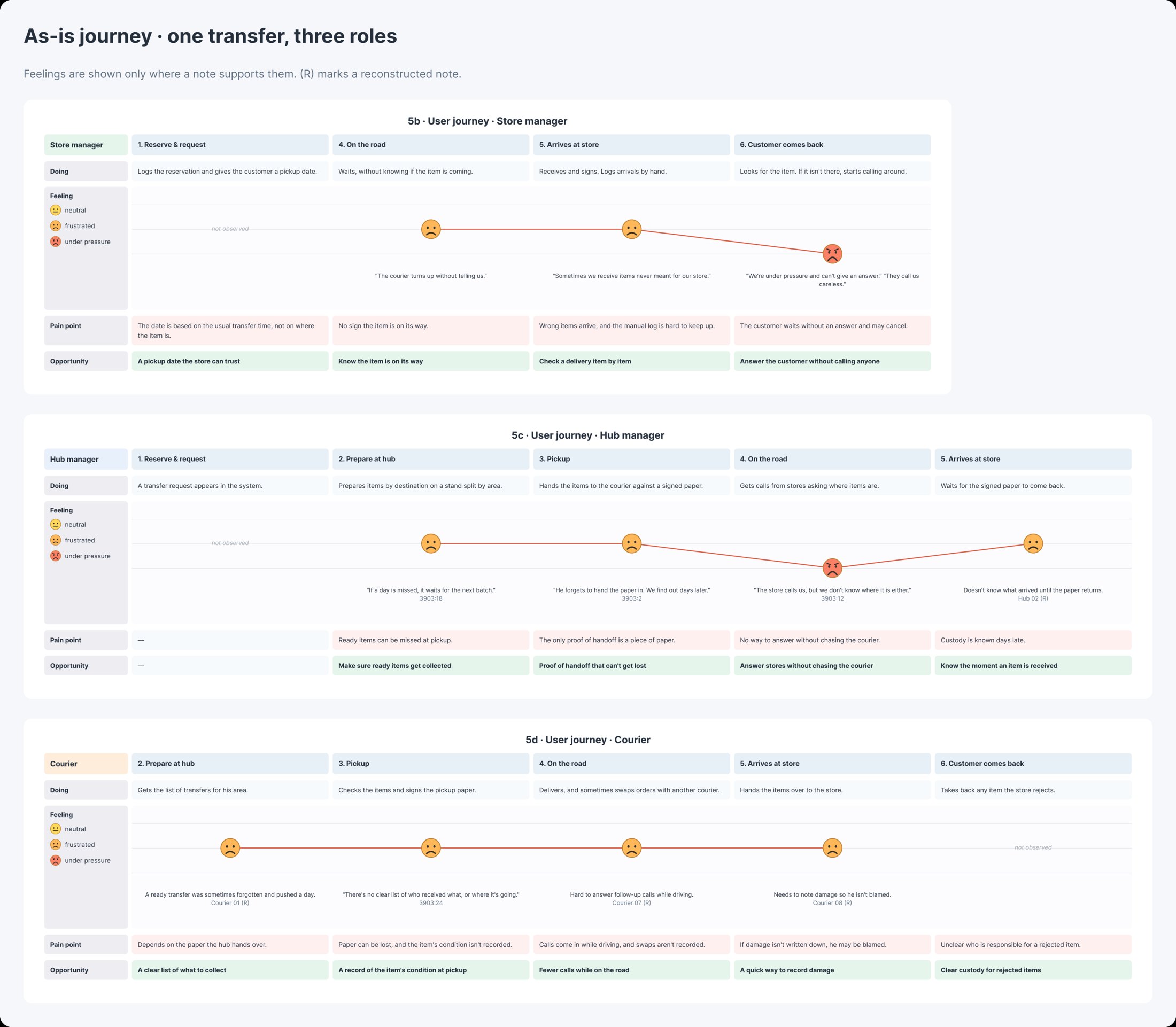
One transfer today, followed through three roles
Most painful moment
Someone asks where the item is, and nobody knows: the store at the counter, the hub on the phone.
Issues surface late
Custody is only known when the signed paper comes back to the hub.
Feelings are plotted only where a note supports them.
02Discovery · Pain points
Pain points
What stores, hubs and couriers told us, kept to the handoff.
Status is found by phone
“The store calls us, but we don’t know where it is either.”Hub manager
Custody is proven only on paper
“Sometimes the courier forgets to hand the paper in. We find out days later.”Hub manager
Ready transfers missed at pickup
A ready item waits for the next run.
03
Insights
Findings matter only when we know what they mean. These two shaped what we built.
03Insights · Insight 1
A handoff only becomes known when the signed paper comes back.
What we saw
Each handoff was signed on paper, and the hub learned what arrived only when the paper returned.
Why it matters
“Open” in the system told the store nothing about who held the item.
Evidence
“Sometimes the courier takes the paper and forgets to hand it in. We find out days later.”Field note · Hub
“There’s no clear list of who received what, or where it’s going.”Field note · Courier
03Insights · Insight 2
The store has two problems: the item is late, and nobody can say where it is.
What we saw
When an item was late, the store called around while the customer waited at the counter.
Why it matters
Without an answer, customers cancelled before paying. A fix had to give the store an answer.
Evidence
“When an item is late, we’re under pressure from the customer and can’t give an answer.”Field note · Store
“Many customers cancel because they’re tired of the delay.”Field note · Store
03Insights · How might we
How might we make every handoff prove who holds the item, so stores can answer customers and fewer reservations are cancelled?
Ready-transfer lists came from the same research, and are part of the solution.
04
Exploration
One question, four directions. We judged each against the same five questions, chose one, and tested the first draft with couriers.
04Exploration · Four directions
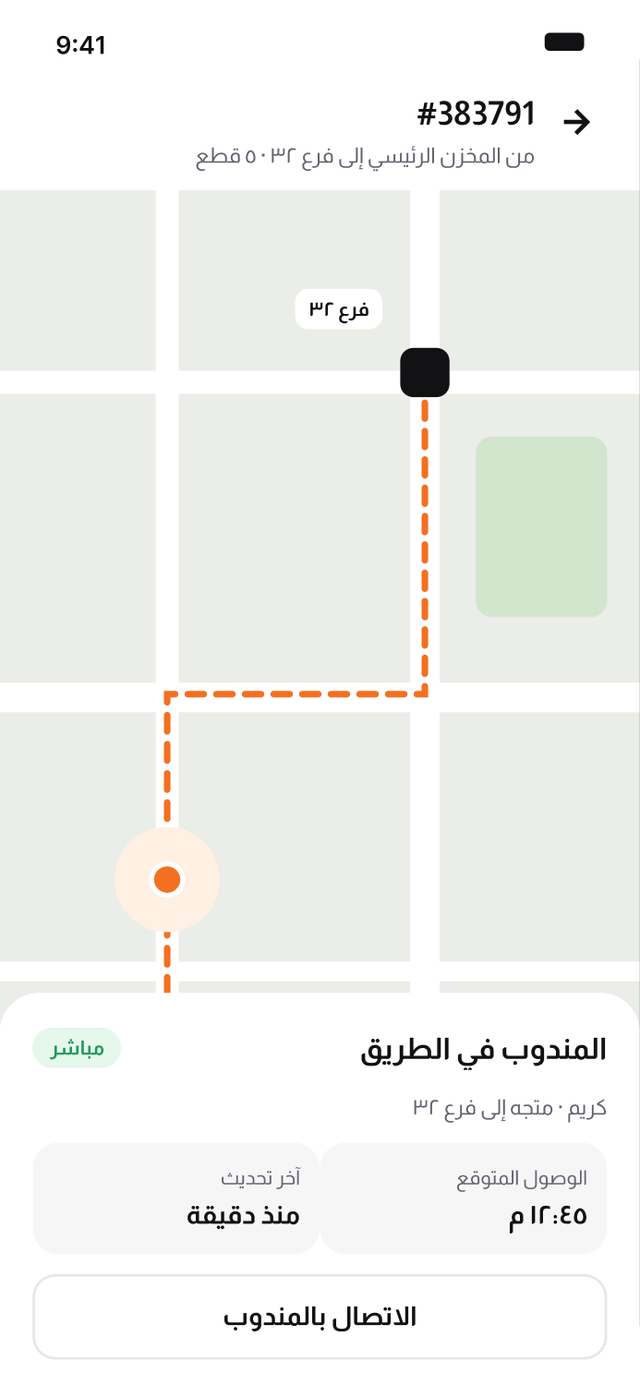
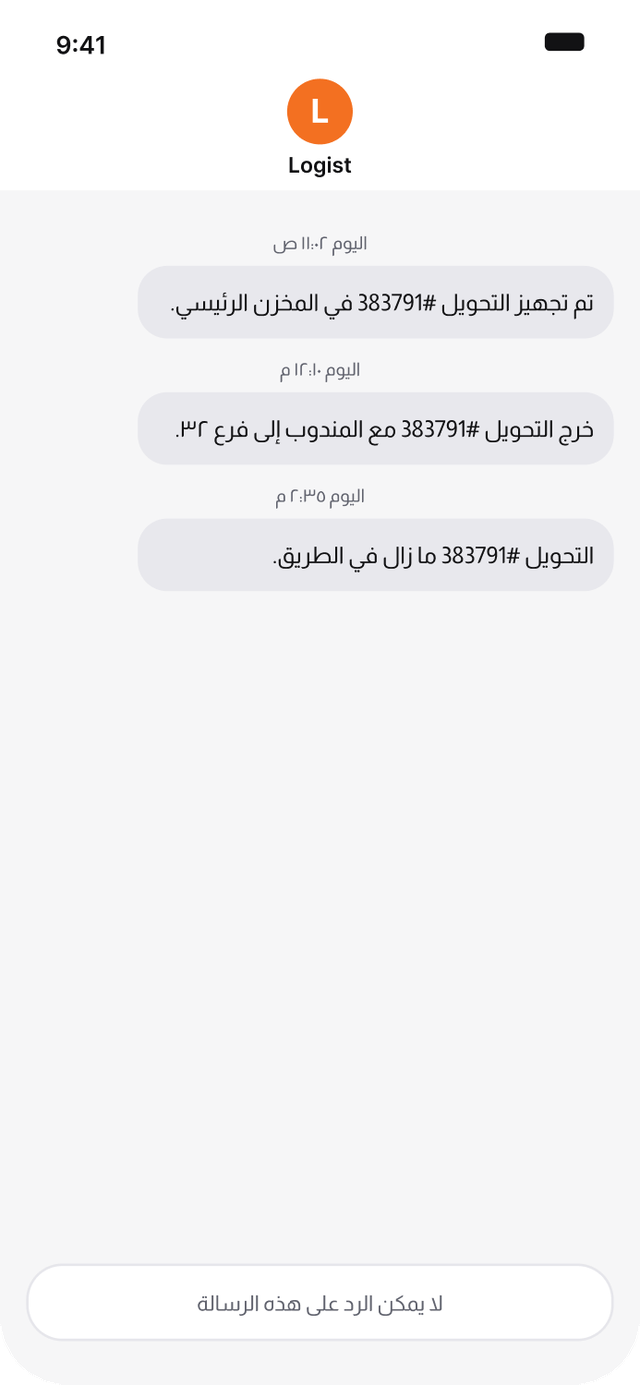
Four ways to answer the same question
How do we prove who holds the item at every handoff?
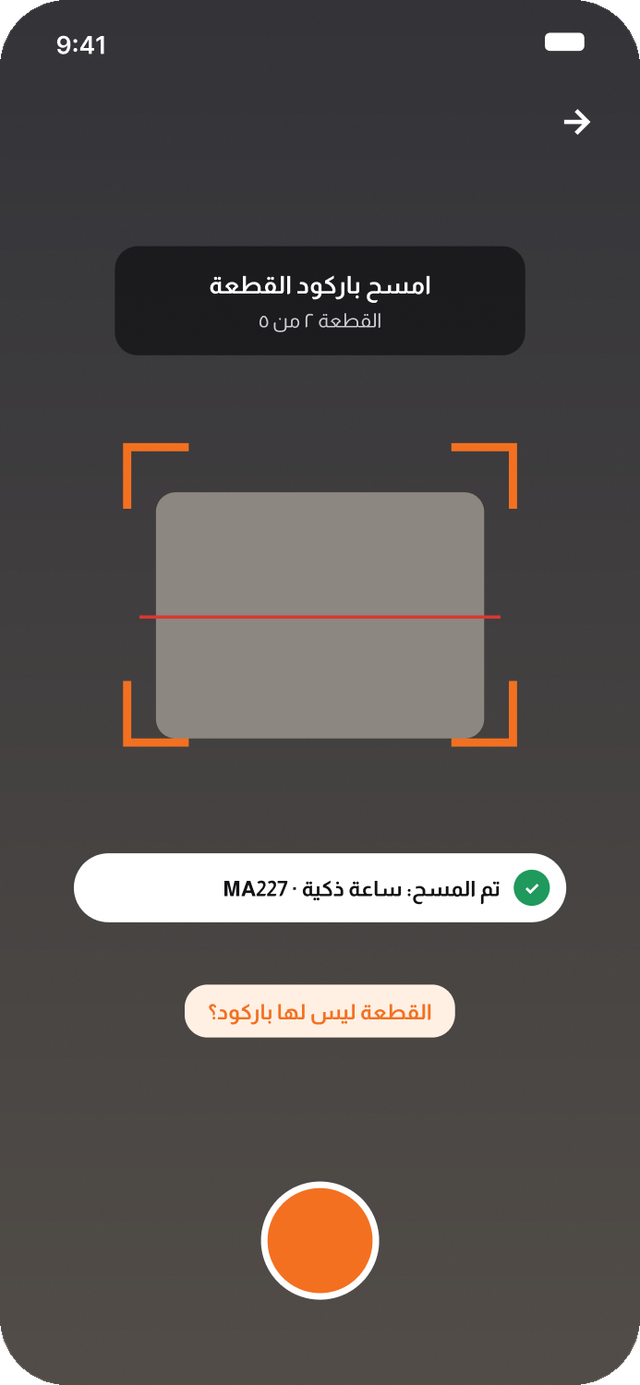
Live GPS trackingDropped · running costSMS updatesDropped · messaging costBarcode at each handoffDropped · not every item has oneReceiver confirmsChosen
Screens redrawn in the 2026 V3 style. GPS, SMS and barcode were exploration concepts, never built.
04Exploration · Decision
Why confirmation won over GPS, SMS and barcodes
Live GPS
SMS
Barcode
Receiver confirms
Solves the users’ problem?
△ PartlyTracks the courier
✕ NoStore still can’t see
△ PartlyNot every item
✓ YesProves who holds it
What users need?
✓ Yes
△ Partly
✓ Yes
✓ YesAn answer for the store
Adds value for users?
△ Partly
△ Partly
✓ Yes
✓ YesPlus a photo of each item
Easy to use?
✓ Yes
✓ Yes
△ PartlyOne scan per item
✓ YesThree steps
Low effort and cost?
✕ NoRunning cost
✕ NoCost at scale
✕ NoLabel printing
▭ ModerateNo running cost
Assessment reconstructed from the decisions and their reasons. GPS, SMS and barcode were exploration concepts and were never built.
04Exploration · Round 1 test
Testing the first draft
Round 1 · first draft
Right after choosing the direction, before polishing the UI.
5couriers
1first draft
1change to the design
What couriers told us
They wanted a place to leave a note on any item, so management can review it later.
What we changed
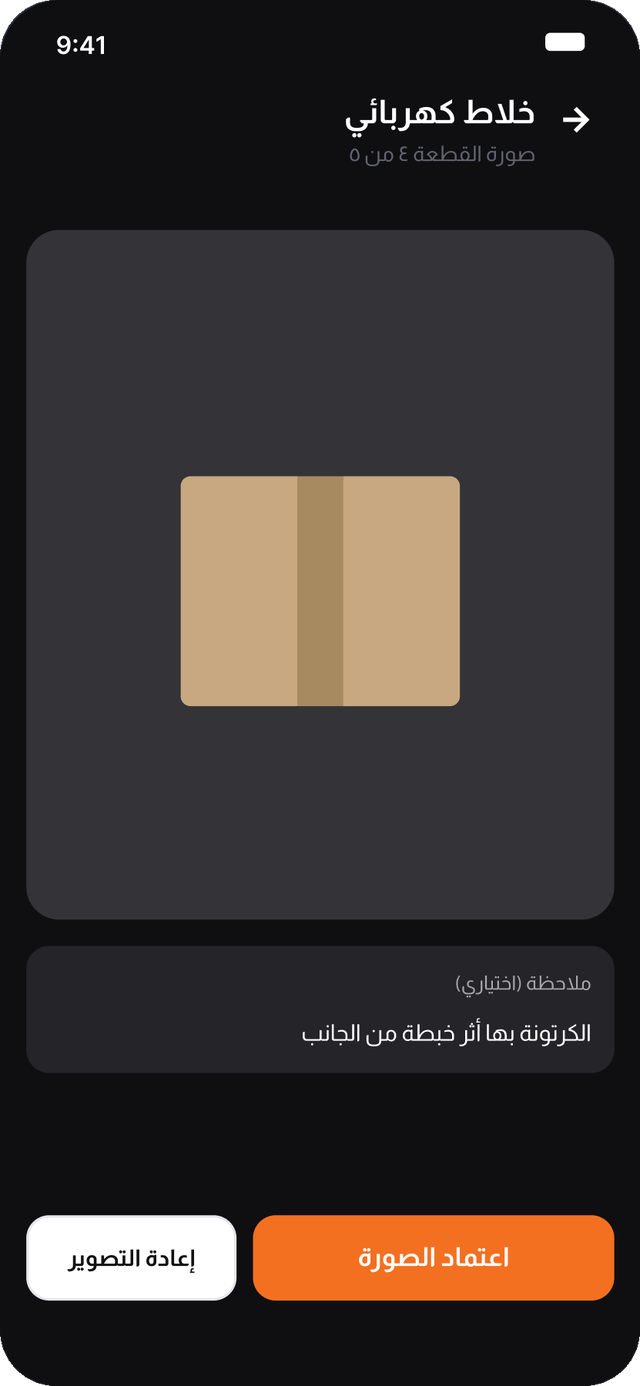
Added an optional note next to each item’s photo.
Screen shown in the 2026 V3 style.
05
Final solution
The handoff, in depth. The receiver confirms on their own phone, and custody moves.
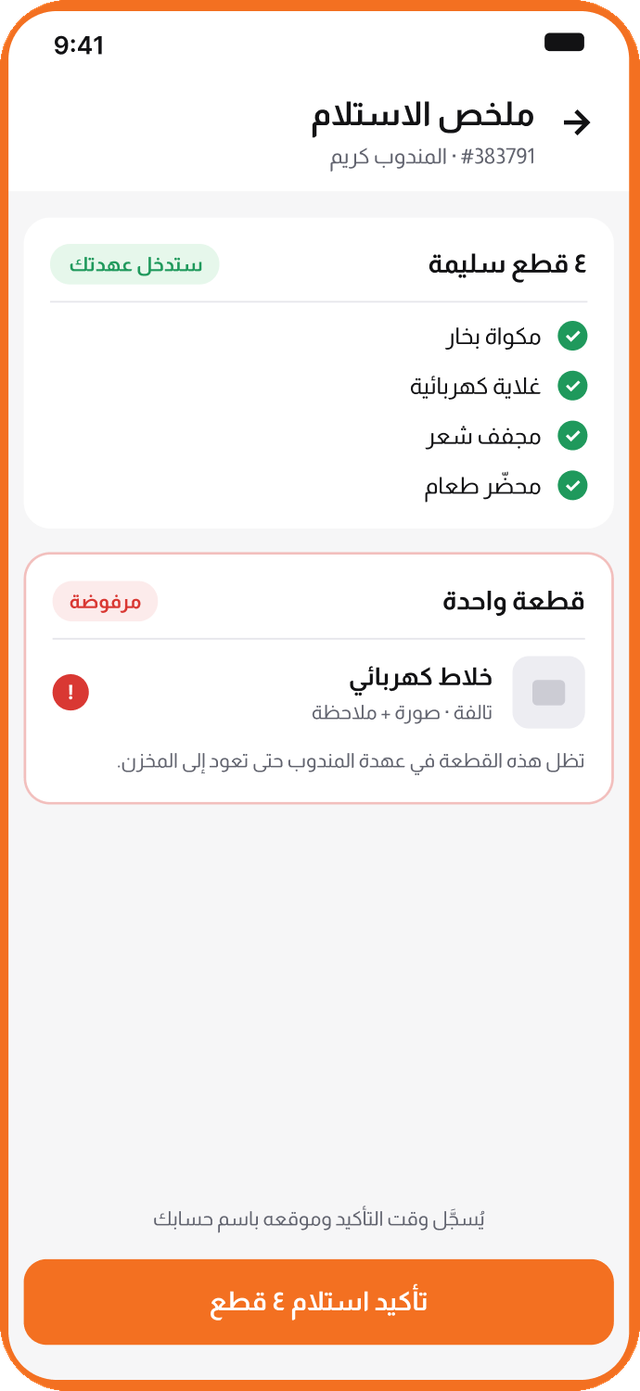
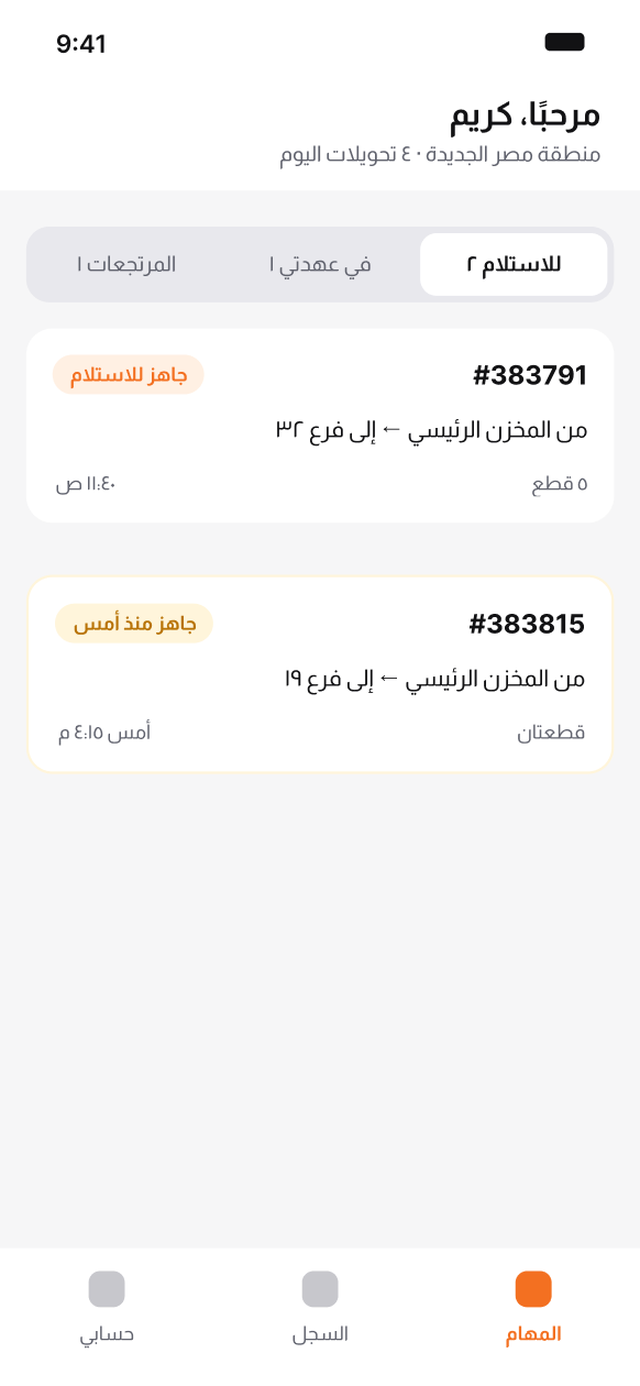
Ready for pickupCheck each itemPhoto of each itemConfirm once
Screens shown in the 2026 V3 redesign style.
05Solution · The handoff
The receiver confirms on their own phone. Custody moves.
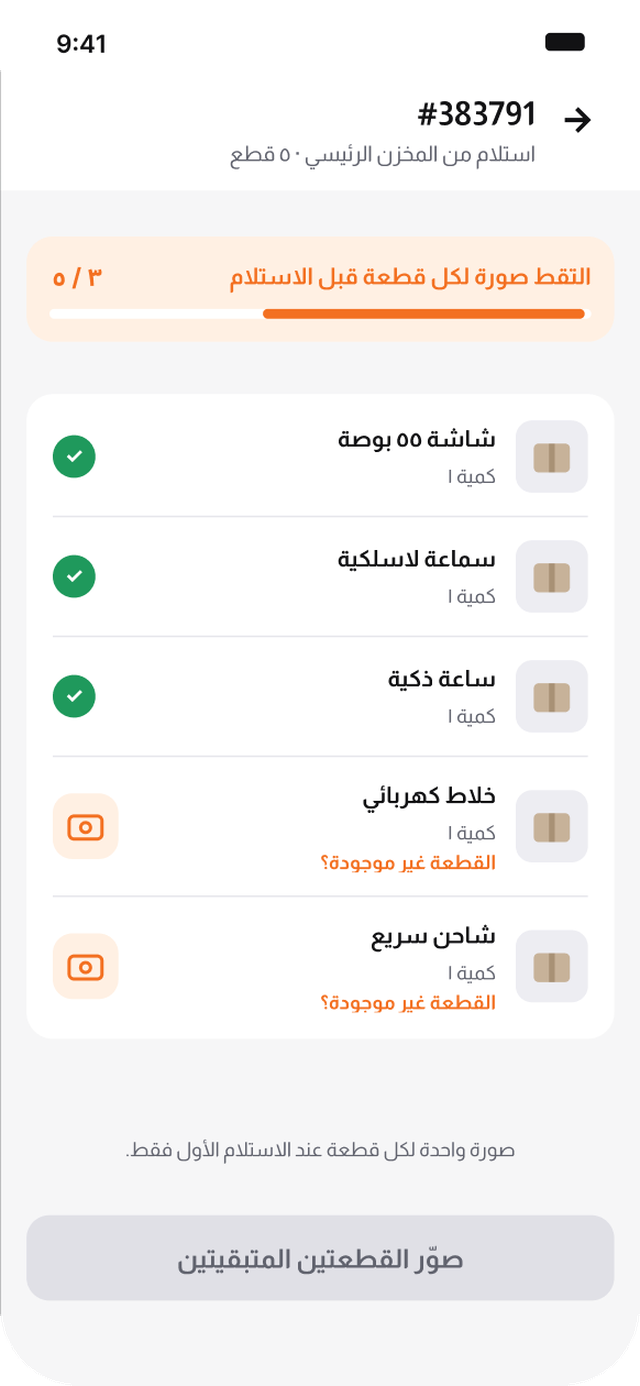
1 · Check each item
The receiver goes through the list of items in the transfer.
2 · Photo of each item
One photo per item, at the first pickup only, with an optional note.
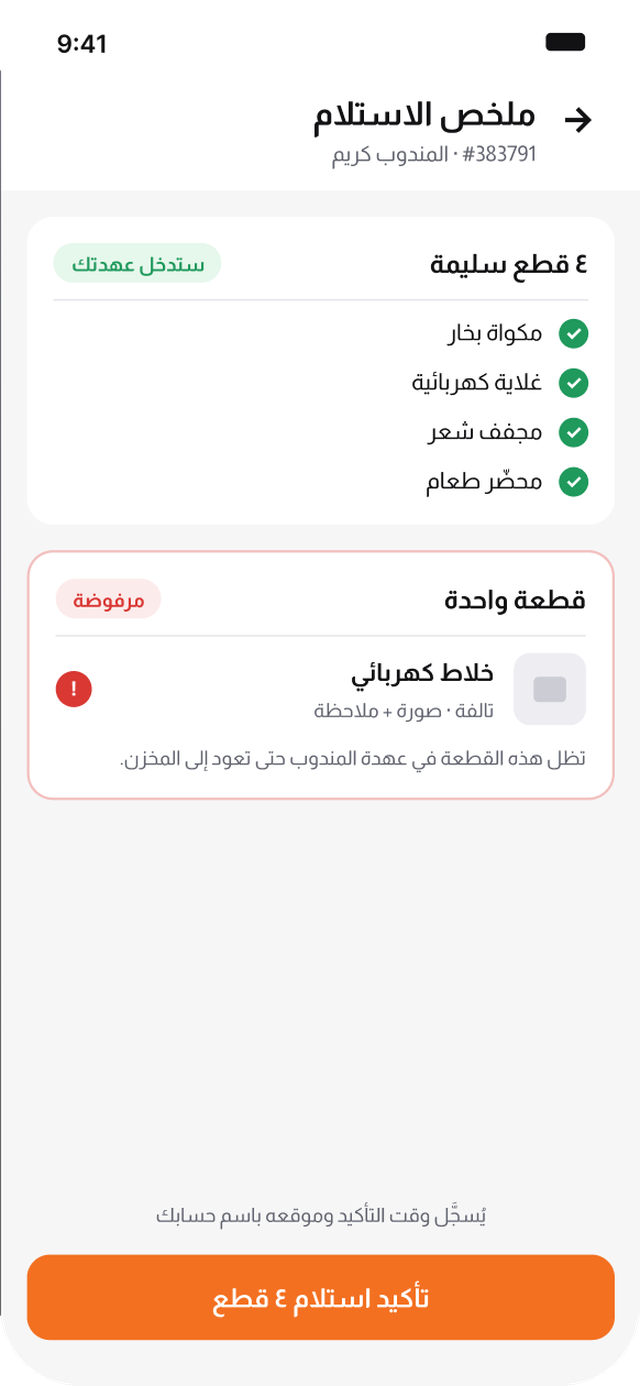
3 · Confirm once
Accepted items move into the receiver’s custody. A rejected item, for example a damaged one, stays with the courier until it returns to the hub. Time and location are recorded under the receiver’s account.
Two questions. Does the solution work? Couriers tested the first draft early, then the polished flow before engineering. Did it move the business? I didn’t have access to post-launch numbers, so here is what I would measure.
06Validation · Why test with couriers
Why test with couriers
1
We were replacing paper that couriers trusted.
2
Couriers work from a motorcycle, so every extra step costs time.
3
Fixing it in the prototype costs less than after launch.
06Validation · Final check before engineering
Final check before engineering
Round 2 · polished UI. The last check before handing over to engineering.
5couriers
2rounds in total
1full-cycle task
The task
Open your assigned transfers, confirm pickup from the hub, then hand the items to the store for confirmation.
What we found
5 / 5 completed the task in both rounds. Between rounds, photos were cut to the first pickup only, plus damage, to save server storage. Round 2 showed the shorter flow still worked.
Limits
The same five couriers took part in both rounds.
Store managers, who confirm the handoff, were not tested.
Partial rejection shipped at launch without being tested.
06Validation · Impact
What I would measure after launch
The usability tests proved couriers could complete the handoff. They don’t prove the business problem got smaller. These are the numbers the design should move, traced back to the problem: late transfer → cancelled sale → extra trip → higher cost of sales.
Business outcome · the goal
Sales lost to late transfersReserved items cancelled before payment because the transfer arrived late↓
Transfer cost per saleCost of extra and return trips, part of the cost of sales↓
Operations · what the design changes
Late transfersShare of transfers confirmed by the store after the promised time↓
Return tripsItems sent back as a “return” after a late transfer↓
Items with no known holderHandoffs without a confirmed receiver→ 0
“Where is it?” callsCalls from stores to logistics to find a transfer↓
Adoption · is it being used
Handoffs confirmed in the app↑
Share confirmed by the receiverOn their own phone↑
Time to confirmFrom the courier’s request to the store’s confirmation↓
Partial rejectionsHow often one item is rejected, and the reasonwatch
“Location unavailable” rateConfirmations saved without a locationwatch
First step after launch: test the store-manager confirmation and partial rejection, which the courier rounds didn’t cover. I didn’t have access to post-launch numbers; baselines would come from Acumatica and the paper-era logs, with targets set by Logistics and Finance.
06Validation · What I learned
What I learned
Proof beats tracking. The cheapest design that answered the store’s question beat the more impressive ones.
Test with the people the design replaces. Couriers trusted paper, so the flow had to be faster than paper to win.
Best Employee award for the quarter. For overall performance; Logist was a large part of that work.
 Live GPS tracking
 SMS updates
 Barcode at each handoff
 Receiver confirms
 Ready for pickup
 Check each item
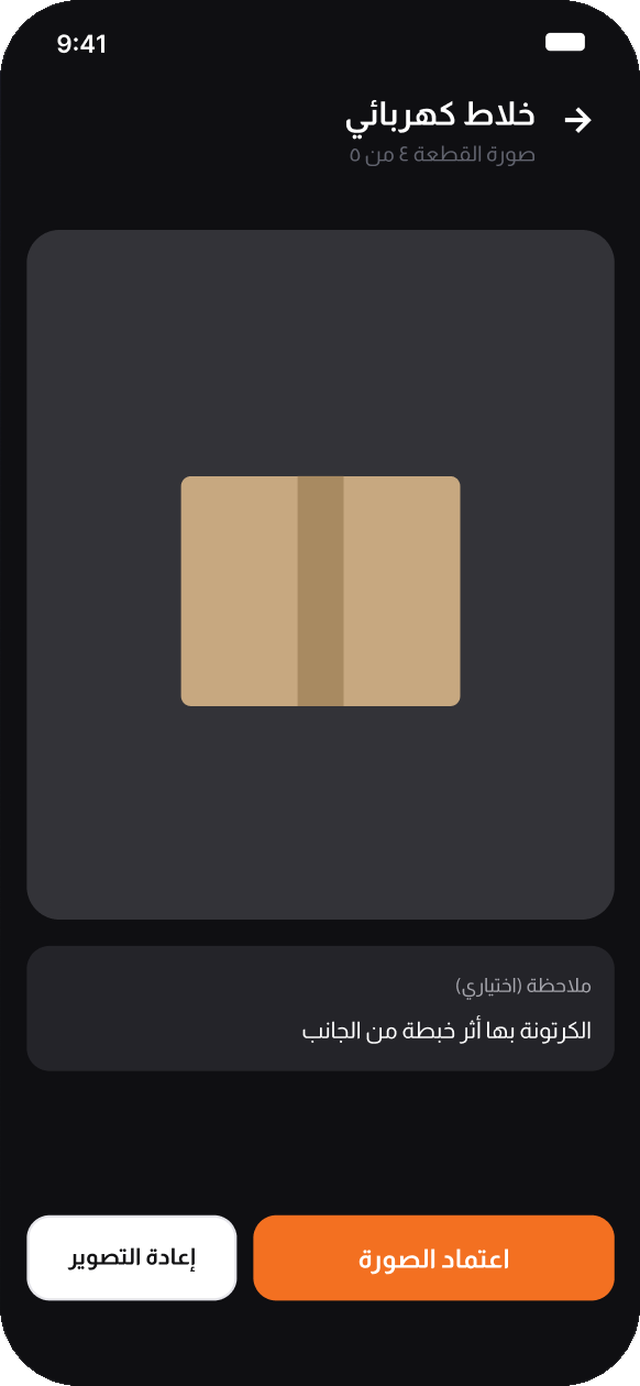 Photo of each item
 Confirm once